by Admin on July 17, 2012
Content Management Systems vs. Static Websites
In the old days, most, if not all, websites were static and were created using HTML, Javascript and/or Flash. You could not edit these websites unless you understood the code or had special software. This made it expensive to maintain these websites.
Content Management Systems (CMS) were created to solve this problem. A CMS allows a person, who doesn’t possess programming skills, to update a website (i.e. create pages and make changes to pages). This can greatly reduce the cost of maintaining a website.
Some of the benefits of using a CMS are:
- If your CMS is open source (WordPress, Drupal or other), you are not stuck with your web developer, there are thousands of other developer familiar with these CMSs ready to help you.
- Ability to update your website from any computer using a browser without using your web developer.
- Built-in search capability.
- Plugins or add-ons for adding photo galleries, calendars, tables, forums, membership only sections, selling items, etc.
So if you’re tired of paying your web designer every time you want to make a small change to your website, you should look into converting your site to a CMS. Many CMS website designers can keep the look and feel of your current website if that’s what you like.

by Admin on July 13, 2012
Many websites have bad navigation (menu) systems. How many times have you found a site on google, clicked on the link and been taken to a beautiful website, only to discover that you can’t find anything on it? Some websites look like their menu system was an afterthought with no rhyme or reason. A beautiful website with good SEO is wasted if visitors to the website can’t find what they are looking for.
Website navigation has become so important that it is now an area of specialization called “Information Architecture”. While many small businesses don’t have either a website or budget large enough to warrant the hiring of one of these specialist, their website designer should be aware of the navigation system’s importance. At the very least, you should ask a few people to look at your website and try to find something. If they have trouble, you should probably rethink your navigation system.
Your website’s ease of navigation is extremely important. If visitors to your website can’t easily find what they are looking for, they will go to your competitor. So don’t let your navigation system be an afterthought.
by blogmistress on July 12, 2012
1&1 Internet recently reported that up to 40% of small and medium size businesses still don’t have a website. That is shocking news. Social media has, in many cases, taken the place of the business website; but business owners need to understand that social media, while very important, is a tool in an overall marketing strategy. A business website is also a very important tool, but it must be a website that performs.
In the past, a business could just put up a static site and call it a day. Today, your website must attract visitors, educate them and convert them into customers. That is a lot to ask of a website, but when done right, it can bring a significant return on your investment. Businesses must integrate social media, content, blogging and more to meet the demands of today’s consumers.
Consumers now want to be educated, they want to be informed more than “sold.” This is a fundamental shift in consumer behavior.
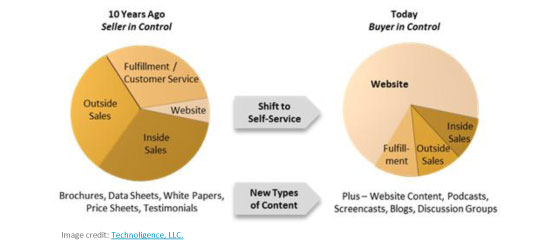
What are you doing to inform consumers about your products and services? When a visitor comes to your site, are they getting information that will help them make a buying decision? Can they find it easily? Realizing the power of information is a great first step in making your website an inbound marketing machine that performs like a champion.

by blogmistress on April 16, 2012
Website design is an important part of internet marketing, but it is just a part. How often, in website design circles, do you think a discussion with a client starts out with questions centered around how the website should “look” or “feel?” Probably, more than you may think. How often do you think that is the wrong place to start? What is your guess? My answer isn’t a guess, it is a statement that how the website “looks” and “feels” is ALWAYS the wrong place to start. Don’t get me wrong, you will need to get to those issues at some point, but it is certainly never the first issue.
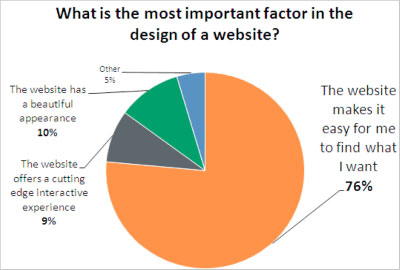
Let’s look at what is important to your customers when they visit your website:
 From: HubSpot
76% of people think that finding what they want is the most important factor of design, while only 10% think beauty is most important. Having an attractive website is important, but making sure that people can find what they are looking for is most important. Possibly, the first questions for clients should be centered around things such as:
- What is the goal of your website?
- What do you want people to do once they are on your website?
- What calls to action do you need on your website?
- Who is your target audience?
Once you have answered some of these basic questions, the design can fall into place around that. Remember, every element of your website should have a purpose. Making it easy for visitors to discover the information they are looking for in an easy to navigate, simple way is most important. It is what will convert visitors into leads and customers for your business which is, generally, the ultimate purpose of your site.
The actual “design” as in the layout, colors and fonts on your website are the easiest part to put together. Your site should be aesthetically pleasing, but just make sure it does not distract from the information and calls to action that you present. Pretty, elegant and simple are good goals to reach for as far as looks. Just keep it simple. Think about your own experience with websites. Have you ever done business with someone you found online because of the font they used on their website? What about the background color or layout? Has that ever gotten you to pick up the phone? Most likely not. Those are just elements that should contribute to the overall goal of your website.
What do you think?

by Admin on March 22, 2012
Lately I’ve seen a lot of websites that look good on the surface, but are horrible when you look at their underpinnings (on page SEO). When I ask about this, I am told that the website designer doesn’t do SEO. Really?!
From a graphic design point of view these websites may be stunning. But from a website design standpoint, they are ineffective at best. Graphic design is not website design. Website design incorporates graphic design and much more. It is possible to build a website a hundred different ways and still achieve the same finished look. However, hidden in the code and content can be a website’s inability to be marketed, managed or monitored properly because a designer/developer used poor or dated techniques.
Some of the items that need to be considered when designing a website are:
1. Canonicalization (does www forward to non-www or vice versa [301 redirect])
2. Map 2-3 keywords per page.
3. What is the density of the target keyword on each landing page?
4. Image & Hyperlink Optimization
5. Header Tag Optimization
6. H1 Analysis – Is the target keyword in the H1 for each page?
7. Title Tag Optimization – Is the title keyword optimized?
8. Nofollow – Are non-target words nofollowed on site.
9. W3c Validation
A website is like a house. You can cover up the poor underlying structure with an aesthetically pleasing surface, but you still have a poor structure. Would you buy a house where you knew the underlying structure was in disrepair even though it looked good on the surface?
Ask your website designer if s/he includes SEO with the website. If not, find another website designer.
by Admin on March 14, 2012
What’s your website’s purpose? That’s a pretty simple question, but you’d be amazed at the number of people who can’t answer it. By the way, the answer is not to make you more money, but more money may be the result of your website achieving its purpose.
The purpose of your website might be to:
- Drive customers to your brick and mortar store- this type of website informs visitors of what’s going on at your physical location (sales, special inventory, etc.) in hopes of enticing them to visit your store.
- Generate leads for your sales force- this is where website visitors fill out forms to get additional information, they then become leads in your sales funnel.
- Provide a way for customers to shop online- these are ecommerce sites where customers can shop online
- Provide contact information to potential customers- these are brochure or yellow page websites that provide information to visitors who may be looking for a phone number or address.
Once you decide what the purpose of your website is, you can start measuring your results to see if your website is achieving its purpose. If you aren’t getting the results you need, then you can modify your website.
by blogmistress on March 12, 2012
One of the best things about internet marketing is that it can be measured. You can actually “see” whether or not you are getting results. So, that begs the question: Are you getting results? Surprisingly, many businesses don’t know if their website is really working for them, they just know that it “looks pretty” and that they get “compliments” on it. This is known as the “spray and pray” marketing method – put something up and pray that it will work.
Often times, what makes a website great and what gets results are the things that you don’t see like:
- Well researched keywords placed in the right places on the site
- Clear calls to action
- Well-made landing pages
If you are basing your marketing on how things look on the surface, you may be missing the point. It is like finding a great looking dress or nice looking suit. It may look great on the hanger but once you try it on, you find that it is poorly made. The fabric is shoddy or the fit isn’t right. Just because it looked great, doesn’t mean it will work.
Don’t spray and pray, do it right and get results – which in the case of most businesses, means more leads and customers.
Is your website getting results?
by blogmistress on March 1, 2012
Make sure that your website is always improving. You should always be reviewing your metrics to see what offers are most successful and improving on them to convert even more visitors into qualified leads for your business.
Focus on these three metrics:
- Visitors
- How many people are coming to my website?
- Where are they coming from?
- Leads.
- How many visitors converted to leads?
- What did they convert on?
- Sales.
- How many leads converted to sales?
These metrics will help you determine what parts of your website need revision. Metrics are pivotal for pinpointing the exact pain points of your website. By doing small, but constant adjustments to your website, you will be able to maximize the utility of your website so it becomes a platform for generating visitors, leads, and ultimately, sales.
by blogmistress on February 29, 2012
It is important to have a system in place that tracks your conversion performance. Wharton Marketing can provide you with ways to analyze the effectiveness of each individual landing page and offer to make sure you are getting the most out of your marketing efforts.
- Your offers should be living, breathing documents that are constantly changing.
- They need to help educate your prospects on the buying process.
- If your landing pages and offerings do not seem to be reaching their full potential, you should try to:
- Attach their links in your email newsletters.
- Have your pay-per click ads go right to the landing page.
- Use them as the next step after a trade show or event.
Website design is not a one and done deal. Your web pages should evolve and improve over time. This is especially important for your landing pages since they help convert your faceless website visitors into opportunities that you have collected vital information about.
by Admin on February 28, 2012
Donʼt make the mistake of underestimating the importance of a compelling landing page. This is where you can see real results of your website redesign.
An effective landing page:
- Leaves out any website navigation.
- Keeps the description of the offer clear, simple, and concise.
- One company found that they had a 32% conversion rate with a longer description and form field. They cut it down, which brought their conversion rate to 53%.
- Keep the form above the fold.
To maximize efficiency, consider these questions:
- How fast can you launch a new landing page?
- Can one person do it in 15 minutes?
- What is the cost of experimentation?
Landing pages are where the magic happens. They are the gateway to your conversion offers that create engaged and interested leads. Make sure you can grab their attention with an interesting offer, but also coherently explain what you are offering through the landing page!
Download the free eBook: 7 Steps to Website Redesign Success to see some other vehicles for original content.


